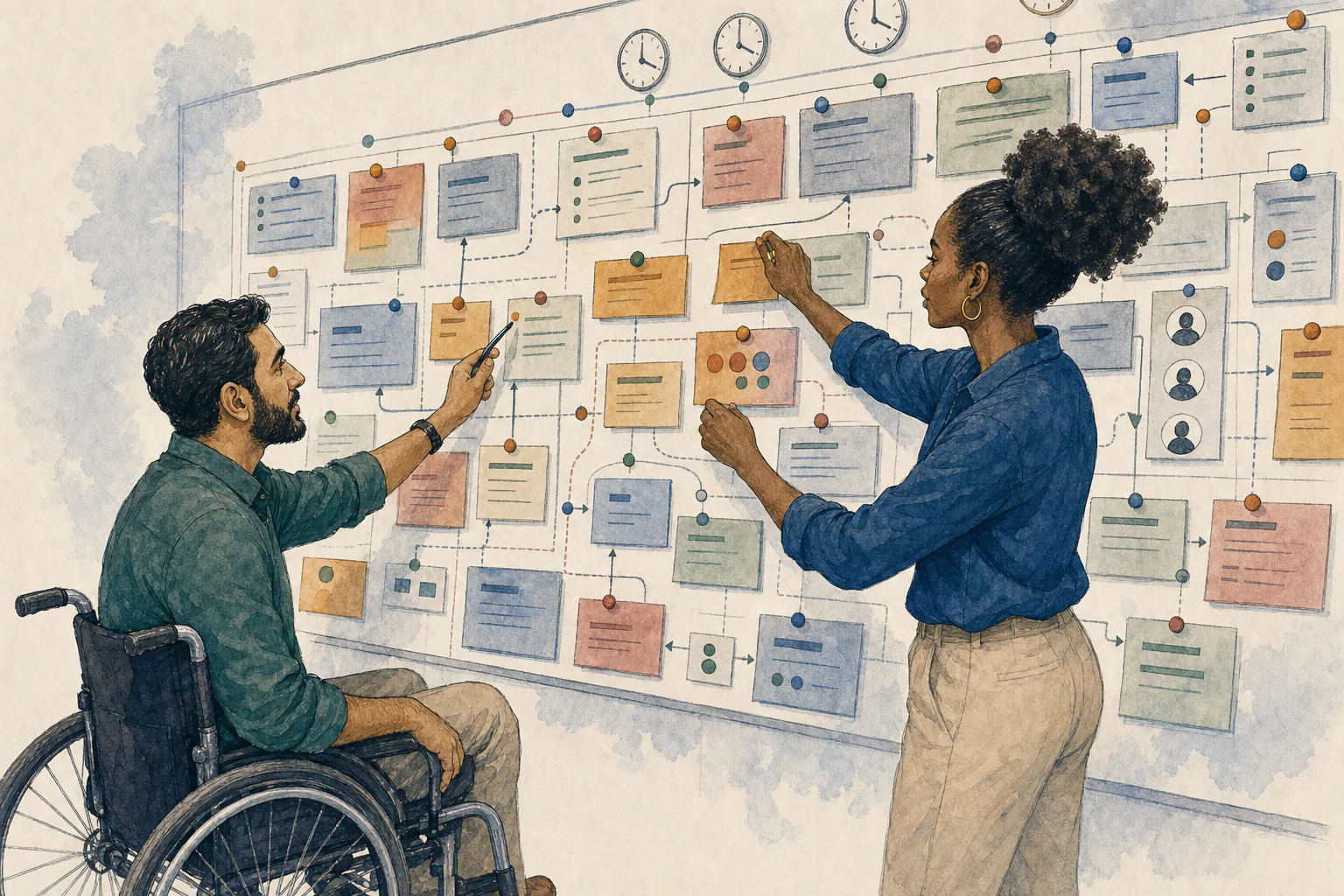
Start with the decisions the view must support
Before building a tracker or dashboard, ask what the operations team needs to decide during a normal review. It may need to identify delayed onboarding, unresolved access, device readiness gaps, vendor dependencies, blocked approvals, or work that lacks an owner.
These decisions define the useful information. Starting with the available data often produces a large report that looks complete but does not make the next action clearer.
Use a small set of dependable fields
Most operational items need a clear description, current owner, status, next action, due or review point, dependency, and escalation state. Where people, devices, applications, or vendors are involved, the record should link them without duplicating conflicting details.
A smaller set of maintained fields is more useful than a wide set of fields that teams update inconsistently.
Make status language specific
Labels such as in progress or pending can conceal different situations. A team benefits from states that explain the operating position: waiting for approval, scheduled for fulfilment, blocked by vendor, ready for user confirmation, or complete with follow-up.
The labels should remain few enough to use consistently. Their job is to make the next type of action visible, not to describe every detail of the history.
Separate the record from the review routine
A shared view does not create accountability by itself. The team still needs a review cadence, named participants, and clear rules for updates, decisions, and escalation. The view supplies evidence for the conversation; the routine moves the work.
Keep the view close to operational truth
When work changes, the shared record should change at the same time. Requiring a separate reporting exercise encourages stale status and duplicate maintenance. Wherever possible, the view should draw from or sit directly beside the workflows the team already uses.
The best operational view is not the most elaborate. It is the one the team trusts when deciding what to do next.