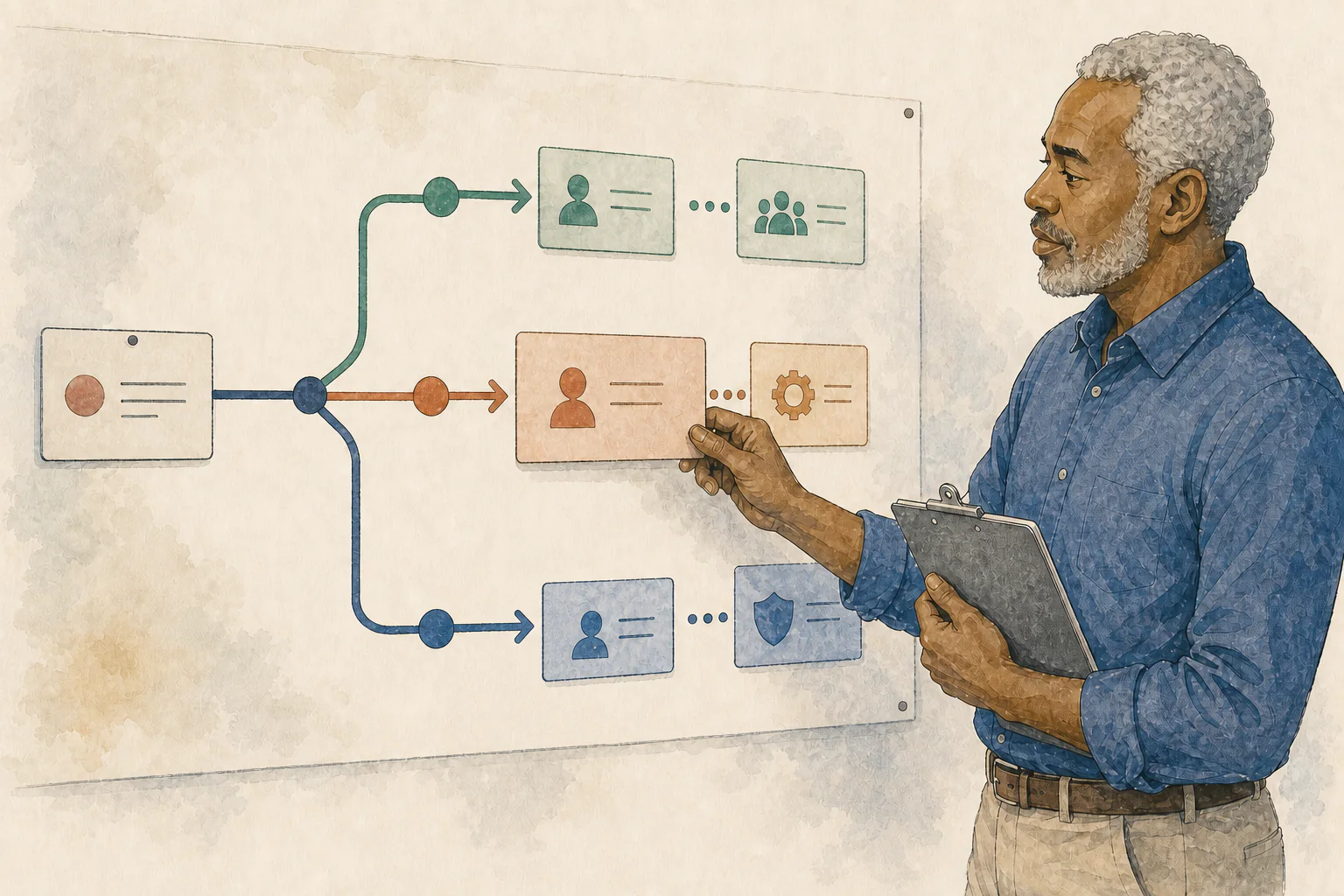
Define the trigger before naming the contact
A contact list is not an escalation path. The team first needs to define the conditions that require a different level of attention. Examples may include a blocked start date, repeated vendor delay, missing access that affects delivery, an unresolved device issue, or a decision that has passed its agreed response point.
Clear triggers reduce two common problems: raising every issue as urgent and waiting too long because nobody is sure whether the issue is serious enough.
Carry the context forward
An escalation should not force the next person to reconstruct the issue. It should identify the affected work, current owner, known impact, actions already taken, decision or support required, and the next meaningful time point.
This context is especially important across locations and time zones. The person receiving the escalation may not be able to speak immediately with everyone involved.
Keep one operational owner
Escalating an issue does not remove ownership from the original workflow. One person should continue to coordinate updates, record decisions, and confirm that the issue is closed. Otherwise, the escalation can create another handoff gap.
Separate information, decision, and intervention
Not every escalation asks for the same response. Some notify a manager of developing risk. Some require a decision between two options. Others need direct intervention with a vendor, application owner, or client-facing team. Naming the required response helps the recipient act without unnecessary clarification.
Review patterns, not only individual incidents
Once an issue closes, operations should ask whether the escalation exposed a recurring weakness. Repeated access delays may point to a poor request path. Repeated vendor escalation may show unclear expectations. Repeated device issues may indicate that readiness is checked too late.
The value of escalation is not only resolving the immediate problem. It also shows where the operating model needs a clearer routine, owner, or review point.